A Blog About Tax Savings for Building Owners

Category: Commercial Real Estate

The Cost Segregation 20/20 Rule for Commercial Real Estate Brokers

As we move into the second half of 2026, commercial real estate brokers have an opportunity to add significant value to their clients simply by understanding what I call the 20/20 Rule.

The rule isn’t an IRS rule. It’s a practical rule of thumb that can help buyers quickly estimate the potential tax benefits of a cost segregation study. The tax savings is often significant and is material for the new owner. It continues to surprise me that more CRE brokers never bring this up with your clients. Here’s a back of the napkin pitch that will help CRE brokers give their clients an idea on roughly how this might work to their benefit.

Here’s how it works.

The First 20: Land Value

Many commercial properties allocate approximately 20% of the purchase price to land. Every property is different, and buyers should discuss this with their CPA to determine the right land allocation. This is not something we as a cost seg firm determine for you. But for the purposes of this exercise, let’s use 20% because that’s a pretty common allocation.

Let’s assume a buyer purchases a commercial building for $1.2 million.

  • Purchase Price: $1,200,000
  • Land Allocation (20%): $200,000
  • Building Basis: $1,000,000

That leaves approximately $1 million of depreciable basis. This is new basis provided the property was not acquired through a 1031 Exchange. If it was, that will affect the basis and we would need the owner’s CPA to provide us with the carryover basis and new basis in order to make a decent estimate of what a cost segregation study might yield.

The Second 20: Accelerated Depreciation aka 100% Bonus Depreciation

The OBBBA make 100% bonus depreciation permanent in the tax code. There is no longer a phase out or sunset. Every commercial property is going to be different but most will tend to  see something like 15-25% of the cost basis eligible for 100% bonus depreciation. 100% bonus depreciation is for assets that are 20 year class life or less. Many of these buildings will have 5-15% that might be 5 year life and 10-15% that might be 15 year life. Again, for the purposes of making this simple, let’s say that 20% of the cost basis can be accelerated – i.e. qualify for 100% bonus depreciation. This can be taken in year one of ownership or whenever the owner ends up applying the cost segregation to his taxes. It’s a one time tax benefit and it’s powerful.

Again, every property is different. Some properties may be closer to 15%. Others may be 25%, 30%, or even higher. However, 20% is a solid number to use when penciling this out.

Using our example:

  • Building Basis: $1,000,000
  • Bonus Depreciation (20%): $200,000

Potential First-Year Deduction: $200,000

What Happens Without Cost Segregation?

Without a cost segregation study, the buyer depreciates the building over 39 years.

Using the same $1 million building basis, the first-year depreciation deduction for a property acquired midway through the year may be roughly $12,500. At a 35% federal tax rate for example, that’s a tax savings of $4,375. And the depreciation deduction in year one gets less the later in the year you close on a property. Depreciation is pro-rated.

What Happens With Cost Segregation?

The owner gets a deduction of $200,000 in this example and it doesn’t matter if he closed on the property at any date throughout the year. It’s not pro-rated like straight line depreciation. The tax rules allow the owner to take ALL the bonus depreciation that is eligible in year one. In the event it creates a loss because he can’t use it all, then he will just have a loss carryforward and can use that to offset his tax liability next year.

The $200,000 deduction at a 35% tax rate equals a $70,000 income tax savings for the year. That’s 16x greater than the straight line deduction. NOTE: we like to talk tax savings and it is for the year in which you take it, but it’s really a deferral and is why we always recommend owners discuss with their own tax advisors to be sure this is the right move for them. This will impact the recapture tax that will be owed if you sell the building in the future. Of course you could do a 1031 exchange to further defer the tax. Most owner understand the time value of money and would rather have the $70,000 in tax savings today and deal with the taxes at a later date. Those tax savings are free for the owner to use as he sees fit. He could make further investments, renovations, hire someone, buy a truck or just keep it in his bank account. He does not need to reinvest it back into this specific building.

The Opportunity for Commercial Real Estate Brokers

Most buyers and brokers focus on location, cap rates, financing, and cash flow. Very few understand the potential tax benefits available after closing.

That’s where brokers can create additional value and further demonstrate their difference in the marketplace. You don’t need to be a tax expert. Just do a back of the napkin estimate for your buyer and encourage them to get a quote for cost segregation estimate before or shortly after closing. I will often recommend CRE brokers to reach out if you have a buyer who is serious about a property. Let our team run the numbers for you so you have something solid to help in the decision making on the property. Cost segregation will help improve cashflow and ROI.

Remember most studies will often see a 10, 15, 20x return on their investment. For most owners, it’s a no-brainer. As a CRE broker, why not be the one to introduce your buyer to the concept of cost segregation. I would think by saving the owner such a substantial amount on his taxes that he might be more loyal to you and maybe do another deal with you in the future. It’s also key for you to have a trusted resource to get quotes and free consultation about cost segregation and it’s benefits. I’ll give you the straight information without over-promising.

Final Thought for CRE Brokers

The next time you’re selling a commercial property, remember the 20/20 Rule:

  • 20% land allocation
  • 20% of the building cost basis may be accelerated through cost segregation.

It’s a simple concept, but it can create significant tax savings for buyers and help brokers deliver value long after the transaction closes.

Why Commercial Real Estate Brokers Should Talk Cost Segregation with Every Client and Prospect

With the passage of the One Big Beautiful Bill bringing back 100% bonus depreciation and making it part of the tax code permanently, commercial real estate brokers need to be talking about cost segregation with every client and prospect. This will create more opportunities for you to close more deals and earn more commissions.

BTW, check our our new cost segregation calculator. Go to www.CostSegCalc.com, scroll down and plug in your asset. It will generate a very accurate estimate for you to see what your tax benefits might be if you do cost segregation.

Commercial Real Estate Deals Q12025 Upstate South Carolina

Upstate Business Journal just published the commercial real estate deals completed in Q1 2025 in the Upstate of South Carolina. It looks like most of the big CRE firms have submitted their sales and leases to the Upstate Business Journal to be published.

Firms reporting include:

  • Aline Capital
  • Athena Advisory Services
  • Avison Young
  • CBRE
  • Colliers South Carolina
  • KDS Caine Commercial Real Estate
  • Langston-Black Real Estate
  • Lee & Associates
  • Lyons Industrial Properties
  • McCoy Wright Commercial Real Estate
  • NAI Earle Furman
  • Pintail
  • Prime Realty
  • Reedy Property Group
  • Spencer Hines Properties
  • Trinity Partners
  • Watershed
  • Wilson Kibler
  • Windsor Aughtry

Trump Scraps Longstanding Federal Real Estate Rules Favoring Downtown and Historic Locations

Photo Credit: Bloomberg

President Trump signed an executive order yesterday that reprioritizes where federal government offices need to be located. Like so much of the American government these days, this order goes back to when Jimmy Carter was U.S. President. He wanted to revitalize the central business districts and support the central cities. Now given so many central business districts are suffering as a result of local, state and federal Covid policies, central districts once the source for fun, entertainment, restaurants and office workers appears to be hurting in many areas. Trump’s order guarantees that more suffering is to come with the feds potentially moving out.

The government has a lot of extra space. Lease rates are very costly in CBDs and given the actions to trim the size of the overall goverment, Trump has decided we don’t need the space and we don’t need it downtown. Also, who wants to work downtown these days? Sure there are some cities that are still doing well. But if you are in a blue state, how are your central cities doing? How’s crime? Do people feel safe? How are the restaurants and shops doing in the central business district.

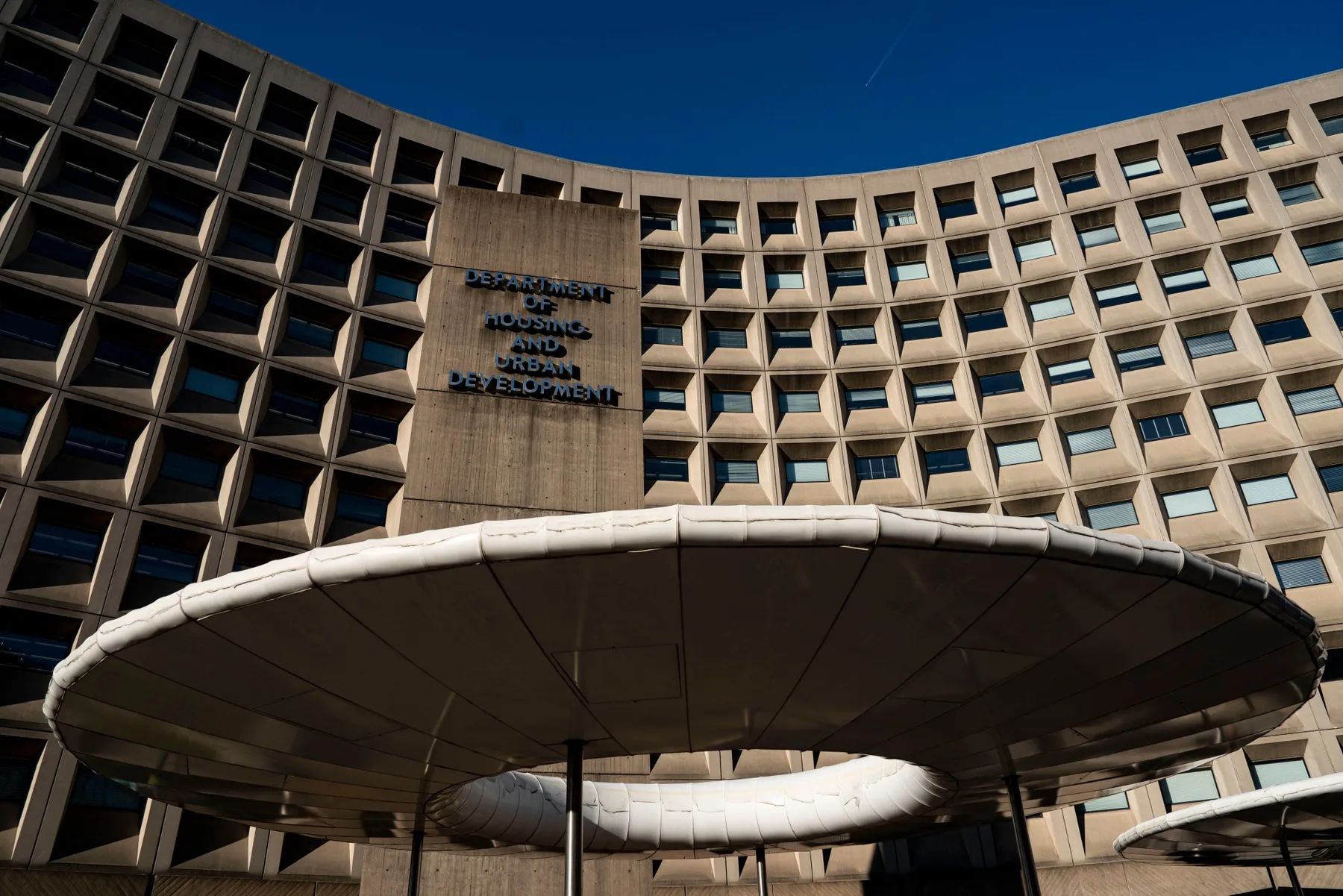
In a related story, the HUD building in Washington, DC has just hit the market. The federal government has put it up for sale.

This seems like a smart move by President Trump. It’s a good move for the tax payers and federal workers I suspect. It will cause more pain though for central business districts and the owners of commercial real estate.

JLL CEO Christian Ulbrich Discussed Q4 Beat on Top and Bottom Lines – Commercial Real Estate in Recovery

Global Commercial Real Estate giant, JLL, sees improvements in the market. Here’s the CNBC interview with JLL CEO Christian Ulbrich: We’re at the beginning of recovery cycle for commercial real estate. He discusses Jones, Lange LaSalle Inc. 2024 fourth quarter financial results.

The stock is up nearly 50% in the past year so clearly there is anticipation that commercial real estate and development is coming back.

Trump’s D.O.G.E. Looking to Sell 80 Million Square Feet of Government Buildings —What It Means for DC and Beyond

Photo Credit – Wikipedia

Cost cutting continues to hit Washington, DC with President Trump’s Department of Government Efficiency (D.O.G.E.) works its way through the vast bureacracy that is the Federal goverment. It’s been reported for a number of weeks that many of the building that the goverment owns have been used very little over the past several years. Trump is looking to sell as many as 443 buildings. 80 million square feet might be coming up for sale.

These buildings are considered “non-core buildings” and they are across 47 states. The General Services Administration (GSA) is responsible for unloading the space. Apparently it will be posted on the GSA’s website.

This comes as reports of a rapid rise in homes for sale in the DC area as a response to the slash and burn attitude that the new adminstration is taking to cost cuts.

The office market has been brutalized in most cities and this is not going to help. At least this is spread out across 47 states but I suspect the bulk of this inventory will hit around the Washington DC metro area.

Here’s a list of government buildings in the Washington DC. It’s unknown how many or which ones will be put on the market.

Sale-Leasebacks & Cost Segregation: A Smart Move for Owners & Investors

Sales Leaseback and cost segregation

Sale-leasebacks have surged in popularity over the past few years, offering building owners a way to maximize their sale price while securing a long-term lease that enhances the property’s value. A well-structured sale-leaseback often results in a desirable cap rate, making the transaction attractive to investors.

But there’s another major financial advantage many overlook—cost segregation.

For buildings involved in a sale-leaseback, a cost segregation study is a must. These are often income-producing properties with long-term owners (typically 3+ years), making them ideal candidates for accelerated depreciation. Instead of keeping the entire asset on a 39-year depreciation schedule, 20-30% (or more) of the building can often be reclassified into shorter depreciation lives, leading to:

Increased cash flow
Higher investment returns
Lower tax liability (even if it’s just a deferral, the time value of money matters!)

In short, cost segregation is a no-brainer for sale-leaseback transactions. Running the numbers costs nothing—and it gives property owners and investors a valuable opportunity to discuss tax-saving strategies with their CPA.

CRE brokers, take note: Getting cost segregation estimates for your clients not only adds tremendous value but also positions you as a well-prepared, knowledgeable advisor. In a competitive market, small insights like these can set you apart.

Want to see what cost segregation can do for your next sale-leaseback deal? Let’s run the numbers—at no cost to you.

Unlock Hidden Value in Your Bank Building: The Tax-Saving Power of Cost Segregation

Banks buildings perform well with cost segregation

Owners of bank buildings and branches are prime candidates for cost segregation studies because of the significant tax savings and financial advantages it can provide. It’s important to get a cost segregation study done so you have all the building components and systems identified. This is the case whether you continue to operate it as a bank or if you are repurposing the building. I have come across a lot of older bank buildings that are often being used as office space for a new tenant or owner.

Bank buildings are particularly well-suited for cost segregation studies. Their specialized design and features often qualify for accelerated depreciation, especially within the 5-year property class life. There are numerous specialty components that are unique to banking that offer valuable depreciation benefits.

Here are some key components and systems to identify for shorter class lives:

  • Specialty electrical and plumbing systems
  • Drive-up windows
  • Interior glass windows
  • Pneumatic tube systems
  • Night depositories
  • Safes and safe deposit boxes
  • Vault doors

Even if you’ve converted a bank building into more traditional office space, many of these specialty items often remain. Reclassifying these assets to their proper 5-year lives, rather than leaving them as 39-year assets, can yield substantial tax savings. Additionally, if you end up removing some of these systems, if you have identified them, you might be able to take a partial asset disposition which would yield another excellent tax deduction.

Nationwide Service with Local Expertise

While I’m based in Greenville, SC, I study buildings like this all over the country. Whether your property is here in the Carolinas or across the country in California, it costs no more to engage my services. Our nationwide network of professional photographers ensures we can efficiently document your property to provide an accurate and thorough cost segregation analysis. The firm I represent, CSSI Services, works nationwide in all 50 states and we work on all types of buildings.

Let’s Talk

If you own a bank building—or any commercial property—and want to explore the tax-saving opportunities of cost segregation, give me a call. I’m happy to provide a no-cost, no-obligation estimate for your building. It’s a simple way to uncover hidden value and improve your bottom line.

John Murphy CSSI

© 2026 Cost Seg Building

Theme by Anders NorenUp ↑